From local currencies to cross-border payments and alternatives to SWIFT, here’s what BRICS is actually trying to build
Published : 17 Sep 2026, 02:21 PM
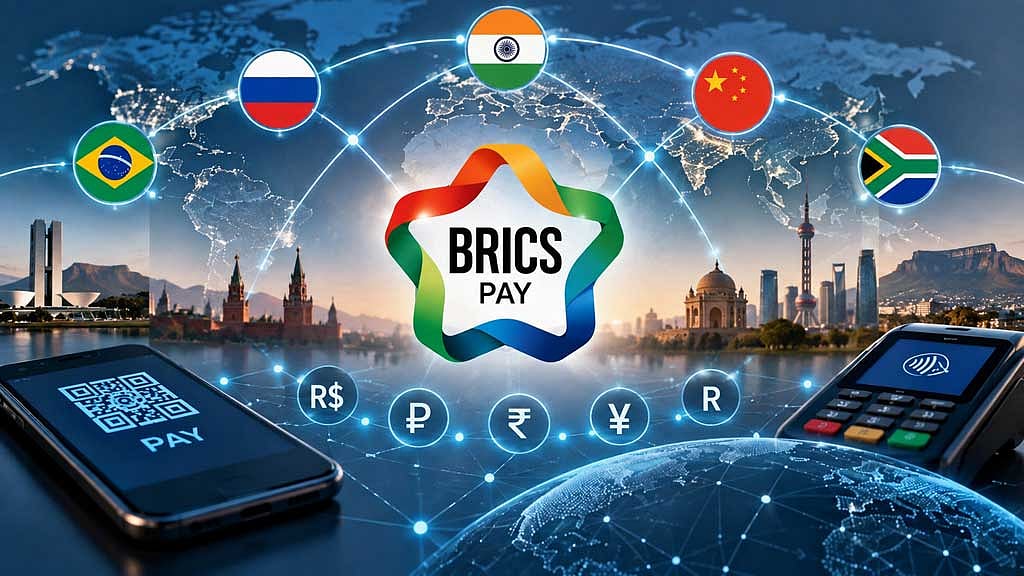
India has UPI. Brazil has Pix. Russia has its Fast Payment System.
What if payment systems in different BRICS countries could interact with each other?
That, in simplified terms, is part of the thinking behind efforts within BRICS to make it easier to move money across borders.
The idea has attracted attention as the grouping explores ways to increase trade in local currencies and reduce the cost of transactions between its members.
It has also generated plenty of confusion.
BRICS has not created a new common currency. Nor has it launched a fully operational financial network capable of replacing SWIFT, the messaging system at the heart of much of international banking.
What it does have is a push to make existing payment infrastructure work better across borders.
So what exactly is BRICS Pay, how could it work — and could it really change the way countries trade?
What Exactly Is BRICS Pay?
The first thing to understand is that "BRICS Pay" can refer to a specific project developed within the framework of the BRICS Business Council, while BRICS governments are separately discussing a broader range of cross-border payment initiatives.
That distinction is important because BRICS Pay is not the same thing as an already approved BRICS-wide government payment network.
The basic idea is to connect existing national payment systems so that individuals, businesses and banks can transact more easily across participating countries.
Russia has Mir and its Fast Payment System. India has RuPay and UPI. Other BRICS economies have their own domestic infrastructure.
But these systems do not automatically work with one another across borders.
Turning that idea into a functioning BRICS-wide network is still a work in progress.
The grouping has agreed to keep exploring ways to make payment systems more interoperable, but it has yet to settle on exactly how such a network would operate.
How Could It Work?
Imagine an Indian business buying goods from Brazil.
An international payment may involve correspondent banks and conversion through a widely used currency such as the US dollar.
A more interoperable BRICS payments architecture could eventually make it easier for Indian and Brazilian systems to communicate while allowing more transactions to be settled in rupees and reais rather than routed through a third currency.
For consumers, the idea could eventually mean familiar tools such as mobile applications, digital wallets or QR codes working across participating countries.
For banks and businesses, the ambition is broader: making cross-border transactions easier and cheaper.
India has pushed the idea further.
Ahead of the Delhi summit, New Delhi proposed exploring links between BRICS countries' central bank digital currencies (CBDCs) to facilitate cross-border payments.
The final New Delhi Declaration stopped short of specifically endorsing CBDC links.
Instead, leaders acknowledged work on making payment and messaging channels interoperable and discussions on greater use of local currencies for trade and investment.
So Is BRICS Creating Its Own Currency?
No.
This is one of the easiest parts of the debate to misunderstand.
A common BRICS currency would mean creating a new monetary unit for use across multiple member countries — a far more ambitious project involving questions over monetary policy, exchange rates and who would control it.
That is not what BRICS Pay is.
India has repeatedly drawn a distinction between creating a new currency and making greater use of currencies that already exist.

The latter is already happening.
The Indian Express reports that 8.14 percent of India's imports, worth Rs 1.58 trillion, were settled in rupees during April-June 2026 — up from Rs 254.02 billion in the same period a year earlier.
Is This About Ditching the Dollar?
That depends on whom you ask.
Russia has particularly strong reasons to develop alternatives to Western financial infrastructure after sanctions imposed over the war in Ukraine restricted several Russian banks' access to SWIFT.
But BRICS members do not all have the same relationship with the United States or the dollar-based financial system.
India has been much more cautious about describing its proposals as "de-dollarisation".
A source familiar with New Delhi's position told Reuters before the summit that India had no interest in replacing the dollar through its CBDC proposal. The objective, the source said, was to make cross-border payments easier and faster.
The more immediate goal is therefore to create more options for moving and settling money rather than simply eliminating the dollar from BRICS trade.
Could BRICS Pay Replace SWIFT?
Not anytime soon.
And there is an important distinction here.
SWIFT does not normally move money itself. It provides the secure messaging network banks use to communicate instructions for international financial transactions.
Its scale is enormous, connecting around 11,000 financial institutions worldwide.
The dollar also remains dominant in payments carried over SWIFT.
The Indian Express, citing SWIFT data, reports that the US currency accounted for 50.99 percent of payments on the network in July, compared with 3.1 percent for China's yuan.
So even a successful BRICS payments architecture would not automatically make either SWIFT or the dollar disappear.
A more realistic prospect is another route for some transactions, particularly trade between BRICS economies.
What's Stopping It?
Connecting financial systems across very different economies is much harder than connecting two apps.
Members have different currencies, exchange-rate regimes, capital controls, banking regulations, sanctions exposure, technology and security requirements.
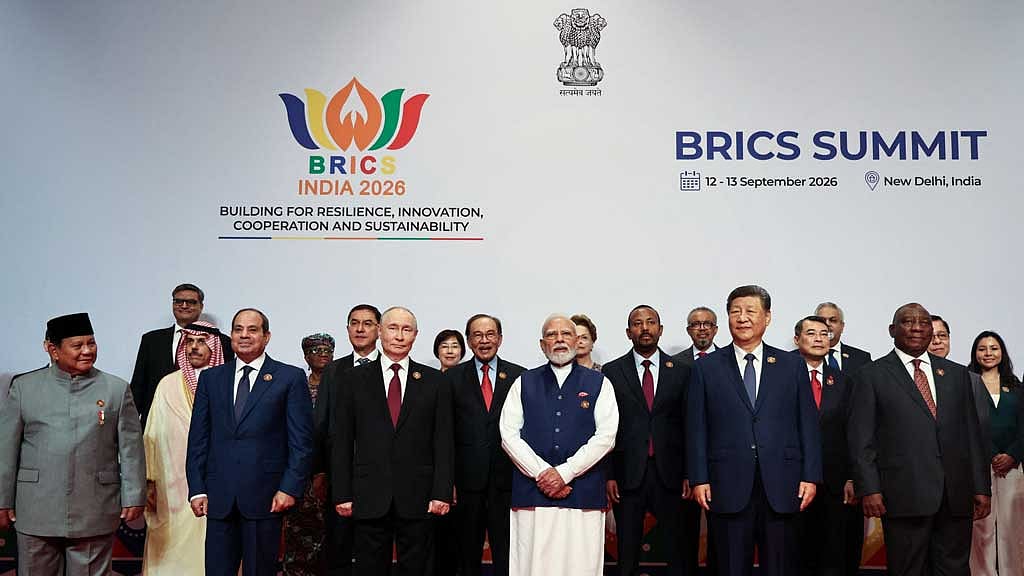
BRICS leaders themselves acknowledged the difficulty in Delhi, saying there was "no one-size-fits-all approach" to local-currency settlement and payment cooperation.
Then there is trust.
Reuters reported that India has been reluctant to deepen financial connectivity with China and stalled a proposal to connect UPI with China-linked Alipay+ because of national security concerns.
Questions also remain over who would control any shared infrastructure.
"Settlement infrastructure is never neutral," Shashwat Alok, an associate professor of finance at the Indian School of Business, told Reuters.
Whoever controls the architecture can potentially wield considerable influence over it.
Those obstacles help explain why years of discussion have yet to produce a single BRICS-wide network.
So What Happens Next?
For now, evolution looks more likely than revolution.
BRICS does not have a common currency. It does not have a replacement for SWIFT. And it does not yet have a single payment network seamlessly connecting all its members.
What it does have is continued work on linking payment infrastructure and making greater use of national currencies.
The New Delhi Declaration says the BRICS Payment Task Force is exploring "pragmatic solutions" for more efficient cross-border payments and studying how payment and messaging channels could work more easily across borders.
That may sound less dramatic than launching a "BRICS currency".
But if an Indian company could eventually pay a Brazilian supplier more quickly and cheaply without routing the transaction through a third currency, the practical impact could still be significant.