A three-hour podcast, a packet of toffees and a decade of viral moments show how deliberately Modi has mastered life inside the feed
Published : 17 Sep 2026, 03:08 PM
A packet of Italian toffees, handed over during a routine diplomatic visit, drew more than 110 million views within six hours. A three-hour podcast turned into a viral confession about childhood poverty. A nickname born from a single selfie spawned thousands of fan edits across two countries.
None of this looks like traditional politics. All of it belongs to Narendra Modi.
He is a meme template, a podcast guest, a social media personality and, at times, one half of an internet "ship", the slang term young users use when they playfully pair two public figures together.
Modi turns 76, and his political career has taken him from Vadnagar in Gujarat to the centre of Indian power.
His digital career has taken him somewhere else entirely, into reels, edits, fan pages and jokes that travel faster than official statements.
From Tea Stall to Timeline
Modi was born on Sept 17, 1950, in Vadnagar, a small town in Gujarat.
His family was associated with a tea stall, and his official biography says he helped there while continuing his education. He was also drawn to reading, debate and the local library, according to PM India.
That childhood story has become the foundation of his political image.
To supporters, the tea stall represents his distance from India's old political elite, suggesting that power and national leadership can come from an ordinary family and a small town.
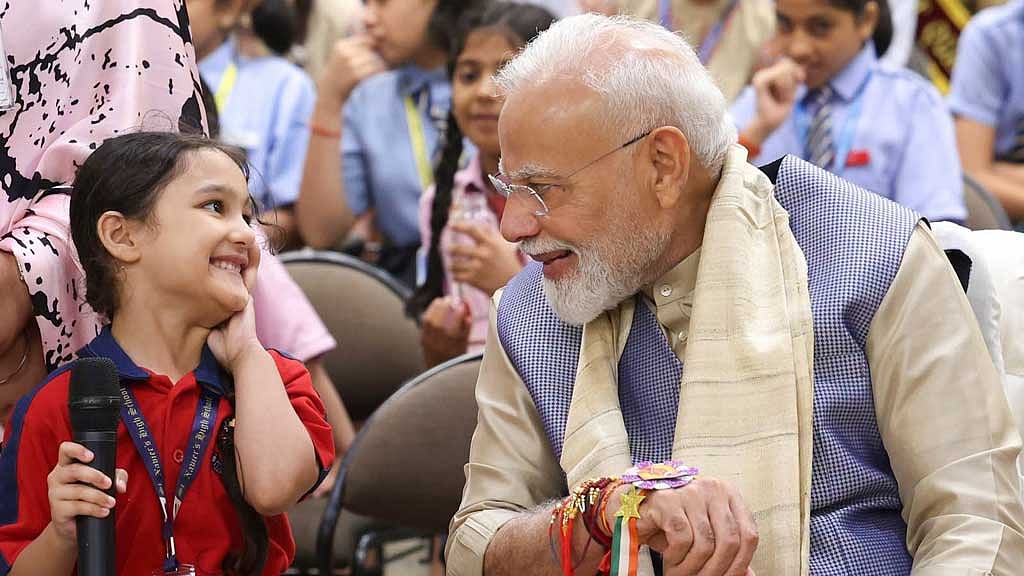
Years later, that same story became a digital asset.
"From chaiwala to prime minister" is short, emotional and easy to turn into a slogan or caption.
Modi's biography has always worked well online because it can be reduced to recognisable images: tea, books, mountains, yoga, temples, military uniforms and world leaders.
The PM Who Became a Meme
The BBC has described Modi as one of India's earliest "social media prime ministers", noting he often used platforms such as Twitter to speak directly to the public rather than relying entirely on traditional media.
That strategy has only grown. By September, he had more than 106 million Instagram followers, over 100 million on X and more than 31 million YouTube subscribers, making him one of the world's most-followed political figures, according to the Free Press Journal.
His posts include speeches, government programmes, foreign visits and photographs with other leaders.
But the internet does not always remember the policy announcement.
It remembers the smile, the pose, the unusual gift, or the moment that looks slightly less official. A diplomatic meeting can become a reaction video. A photograph can become a fan edit.
Enter 'Melodi'
The best-known example is "Melodi", the nickname combining Modi's name with that of Italian Prime Minister Giorgia Meloni.
It began circulating after the two leaders appeared together at international events.
Meloni herself helped popularise the label when she posted a selfie with Modi using the hashtag #Melodi.
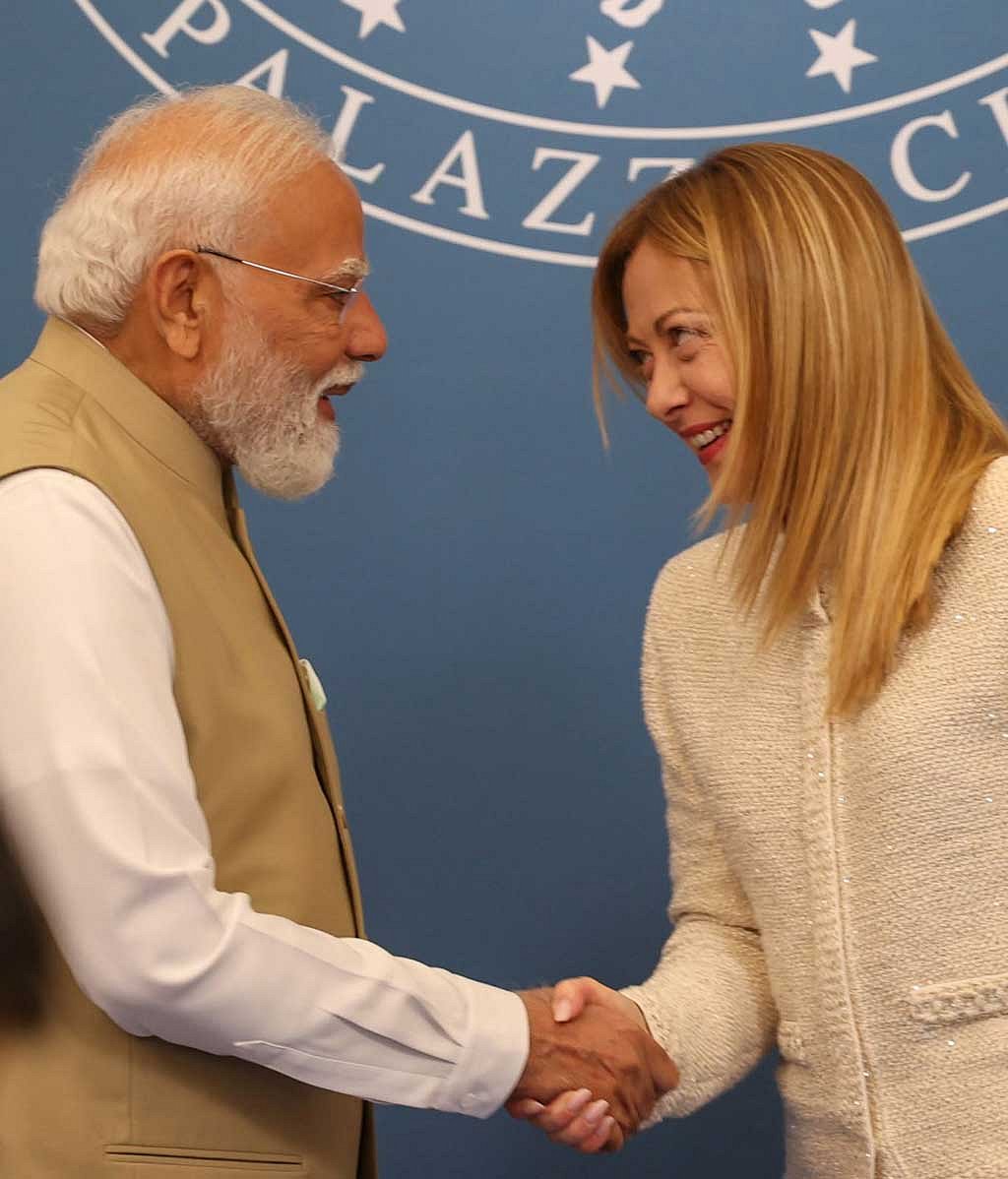
Young social media users then began treating the pair like a celebrity duo, editing their photographs and turning their meetings into playful "relationship" content.
The trend resurfaced in May, when Modi gave Meloni a packet of Melody toffees during a visit to Italy.
A video of the exchange reportedly drew more than 110 million views within six hours.
A packet of sweets became the latest episode in an internet story that had started with a selfie.
While it is a joke, the incident says something serious about digital politics.
Leaders are no longer seen only through official photographs and press conferences. They are absorbed into the language of celebrity culture too.
The Podcast Version
Podcasts have given Modi a different kind of stage.
In January 2025, speaking to entrepreneur Nikhil Kamath, he discussed the "Melodi" memes and said he did not spend his time following them.
He also spoke about his food habits while travelling abroad.
In March last year, he held a three-hour conversation with American podcaster Lex Fridman covering his childhood, the RSS, spirituality, meditation and his travels through the Himalayas.
Modi recalled heating water in a copper vessel and using it to press his school clothes because his family did not have an iron.
He also remembered staying behind during a family wedding to look after a saint.
The podcast format let Modi speak at length and made his personal mythology more accessible to younger audiences who may skip a full political speech but will watch a long-form interview in clips.
The Visual Language Of Power
Modi understands the strength of a photograph.
He has been pictured performing yoga, visiting soldiers, meeting athletes, praying at temples and standing alongside presidents and prime ministers, with each setting adding another layer to his image.
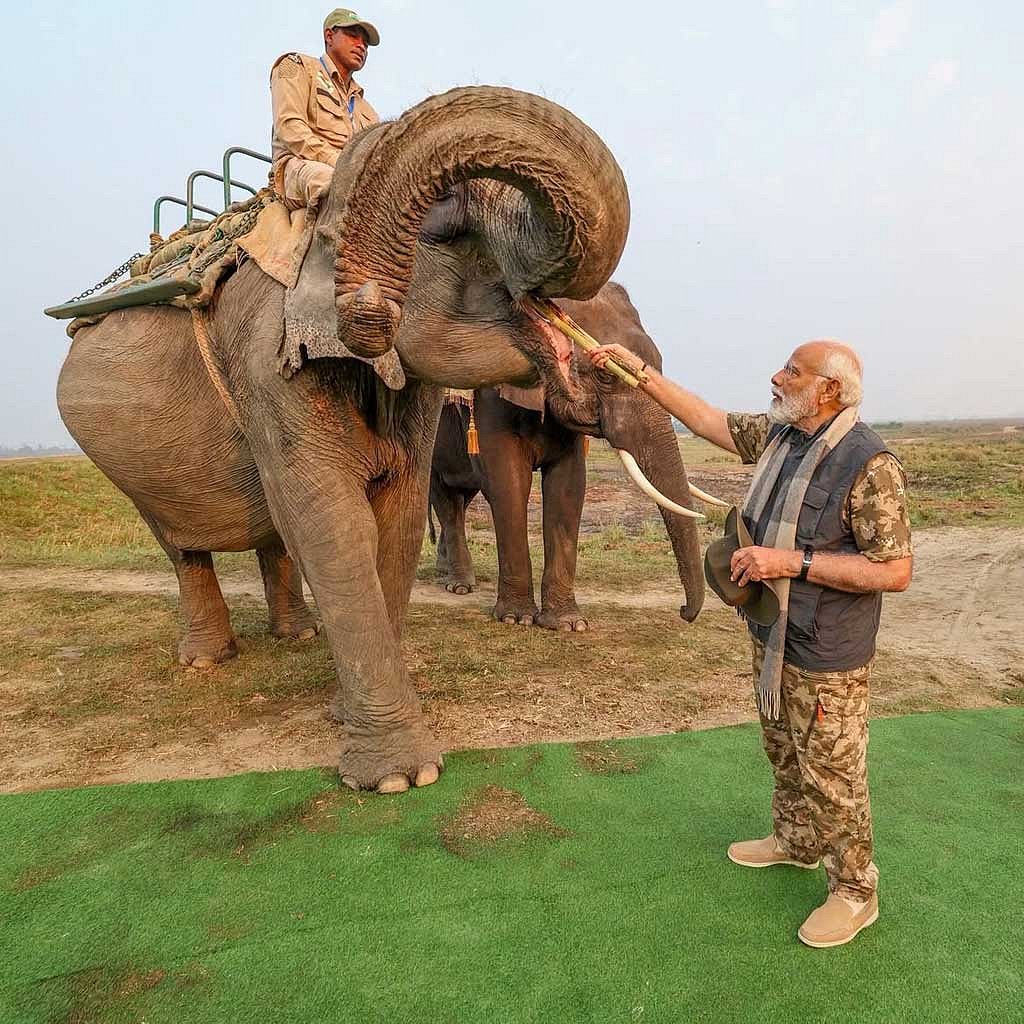
The military photograph suggests strength. The temple image suggests civilisational identity. The yoga photograph suggests discipline. The selfie suggests approachability.
His clothing works the same way. Traditional garments and regional styles let him appear rooted in India's many cultures, while his speeches often focus on technology, infrastructure and economic ambition.
The message is that India can be modern without leaving its past behind.
A Leader Who Enters People's Homes
Modi's monthly radio programme, “Mann Ki Baat”, has been another pillar of his direct-to-public style.
It often highlights ordinary citizens, local initiatives, traditional crafts and community achievements, giving Modi a way to present national progress as a shared responsibility, according to PM India.
His communication rests on repetition: a phrase, a campaign, a story and a face people recognise instantly.
That helps explain why his presence feels so constant. Modi is not encountered only during elections. He appears on radio, television, YouTube, Instagram, WhatsApp and in conversations about whatever moment has just gone viral.
The Politics Behind the Persona
The image is powerful because it connects several different stories.
There is the developmental Modi, speaking about manufacturing, digital infrastructure and India's global ambitions.
There is the devotional Modi, speaking about temples, meditation and civilisational identity. There is the disciplined Modi, recalling simple habits and years of travel.
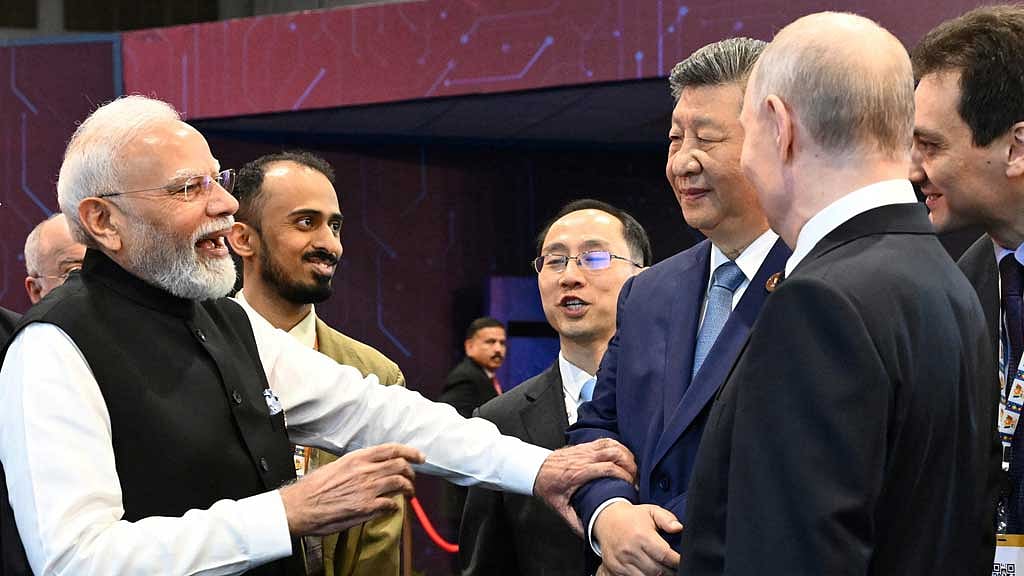
And there is the internet Modi, smiling beside Meloni or reacting to memes in a podcast watched by younger audiences.
For supporters, these versions fit together into a leader who is modern, rooted and personally connected to the country.
Critics see a highly centralised political style in which the leader's personality can overshadow institutions and policy debate, and they question the consequences of the government's emphasis on Hindu identity and nationalism.
Still in Power, Still in the Feed
Modi’s third term began with an unfamiliar political reality.
The Bharatiya Janata Party (BJP) won 240 seats in the 2024 Lok Sabha election -- 32 short of the 272 needed for a majority in the 543-member House.
The wider BJP-led National Democratic Alliance (NDA) won 293 seats and formed the government with coalition partners.
It was still a victory, but not the sweeping result many exit polls had predicted.
After two terms in which the BJP governed with a clear majority, Modi now had to rely more closely on allies whose priorities may not always match his party’s.
That could affect the government’s approach to difficult reforms, including land, labour and economic policy.
It also returned coalition negotiations to the centre of Indian politics -- a space in which Modi had less experience than during his earlier years in power.
The election also gave the opposition a stronger presence in parliament.
The Indian National Congress improved its position, while the wider opposition alliance performed better than expected.
The result suggested that, although Modi remained the dominant figure in Indian politics, the BJP’s electoral strength could not be taken for granted everywhere.
For the prime minister, the third term is therefore both a continuation and a test.
He must preserve the image of a decisive leader while working within a government that depends on regional parties.
He must keep the BJP’s core supporters mobilised while responding to voters concerned about jobs, prices, rural hardship and economic opportunity.
And beyond the immediate politics lies a bigger question: what happens to the BJP after Modi?
Since 2014, the party’s campaigns, slogans and public identity have been closely tied to his personality.
His face is on posters, apps, videos and election messages. His speeches often provide the language of the campaign, while his personal story supplies its emotional centre.
That makes succession an unavoidable question, even when it is not openly discussed.
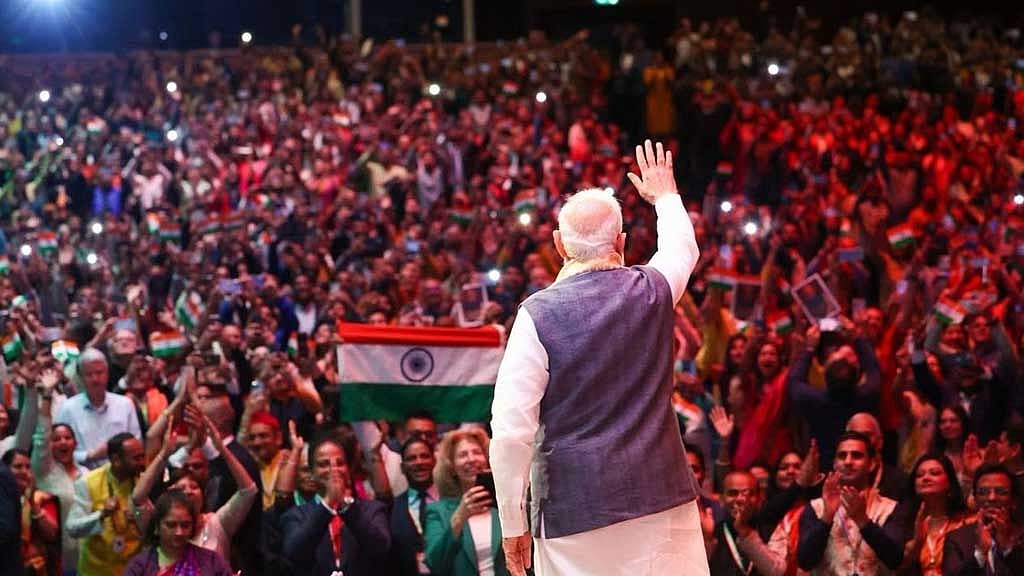
For now, however, Modi’s public image remains unusually dominant. He can be discussing diplomacy in one post, recalling childhood memories in a podcast and becoming the subject of a viral joke in the next.
The boy from Vadnagar has become many things to many audiences: prime minister, campaigner, global statesman, spiritual seeker and meme magnet.