Carrick's side have shown they can get ahead. Keeping control once they do is proving much harder
Published : 17 Sep 2026, 03:07 PM
A two-goal lead at Old Trafford used to be about as close to a guarantee of victory as Manchester United could get.
Before Wednesday night, United had won 143 of the previous 145 home matches in which they went 2-0 ahead.
Against Brighton, it took them only 10 minutes to get there.
Shea Lacey scored on his full debut, Mason Mount added a second less than two minutes later and Michael Carrick's side appeared to have produced exactly the response they needed after defeat in the Manchester derby.
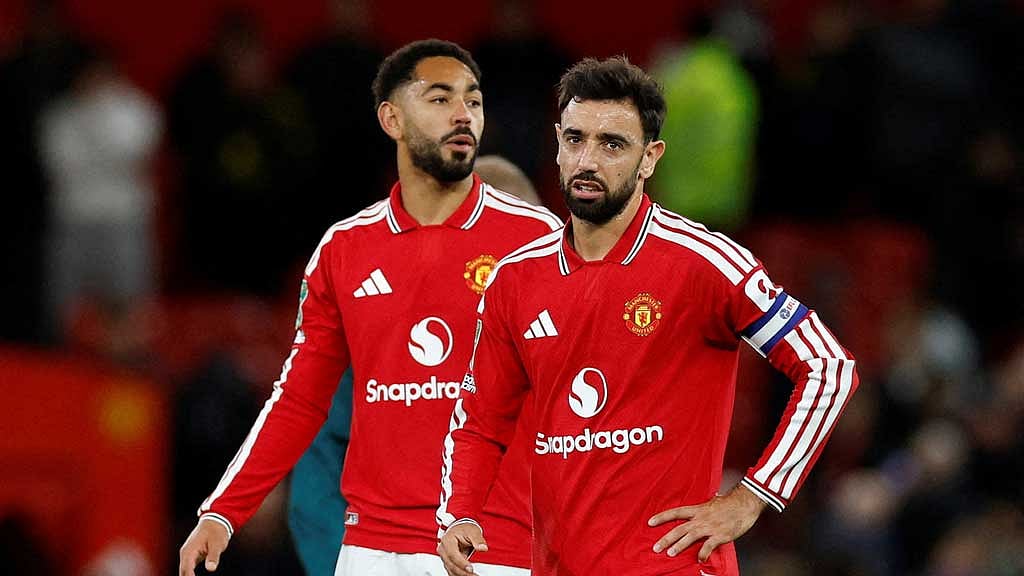
What followed was something United had not experienced at Old Trafford for 50 years.
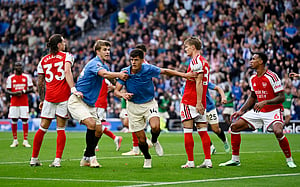
Brighton scored three times without reply and won 3-2, knocking United out of the Carabao Cup and turning what should have been a position of complete control into another examination of Carrick's ability to manage games.
The problem was not simply that United conceded three. It was how dramatically the match changed once they were ahead.
After Mount's goal, United did not register another shot on target until the 76th minute. Brighton, meanwhile, gradually took control and finished with 18 attempts to United's 12, five big chances to one and 14 shots from inside the penalty area compared with United's six.
Their expected-goals advantage was similarly clear, at roughly 1.9 to 0.9.
Brighton Took Over
United had raced into a commanding position. They then allowed the game to drift away from them.
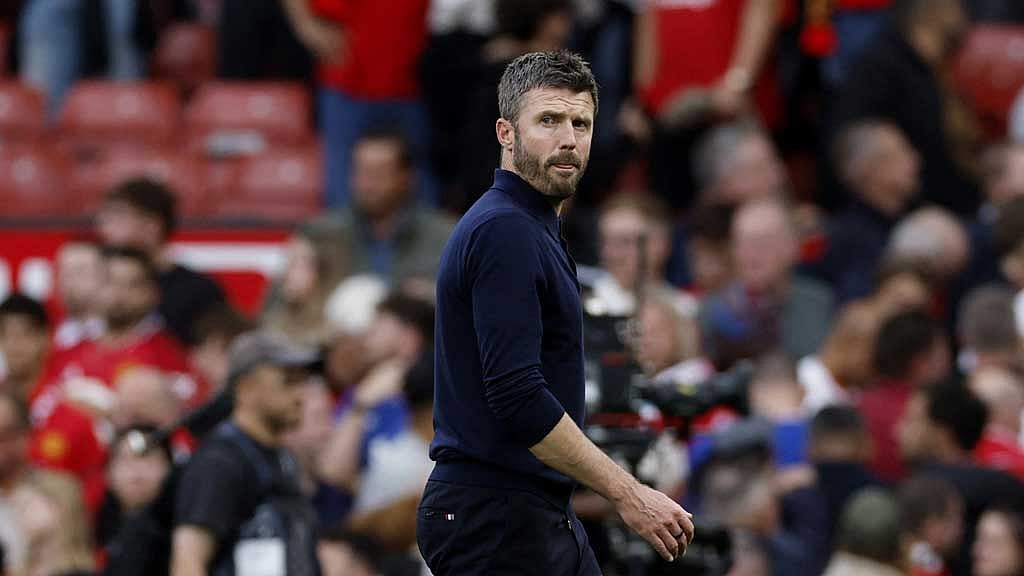
Carrick acknowledged as much afterwards.
"We can't accept that as a group," he said, taking responsibility for a second-half display that ended with boos around Old Trafford.
Brighton's comeback did not come in one frantic burst.
Charalampos Kostoulas pulled one back in first-half stoppage time. Pascal Gross equalised in the 65th minute. Maxim De Cuyper completed the comeback four minutes later.
United had almost an entire half-time interval between the first warning and the decisive collapse.
Yet the momentum never really returned.
Brighton had five big chances over the course of the game to United's one and made 15 key passes compared with six from the hosts.
Possession finished almost even, yet Brighton were the side creating the greater volume of danger. Their 14 shots from inside the box compared with United's five told its own story.
Carrick's side stopped carrying enough threat to force Brighton backwards and increasingly found themselves defending the game rather than managing it.
Learning to Take the Sting Out
United have shown they can score.
They put five past Ipswich, scored twice away at Everton in the Premier League and were two up against Brighton on Wednesday before the game was 10 minutes old.
What they have not shown consistently is the ability to make a winning position uneventful.
Good sides know when to slow a game down, keep the ball away from danger and force opponents to spend long stretches chasing possession rather than attacking the penalty area.
United did too little of any of those things and are still leaving too much room for matches to swing.
Across the Everton and Brighton games, United were outshot 36-25 despite leading three times.
Their opponents produced 11 shots on target to United's seven.
Those are not the numbers of a side comfortably closing games down.
The sample is still small and there are important caveats. Carrick made eight changes against Brighton and fielded a young, unfamiliar side.
But Brighton had also made six changes, and the Everton game involved a much stronger United XI.
The recurring problem is not simply individual mistakes. United are allowing opponents too much attacking volume after going ahead.
Carrick himself appeared to recognise that the Brighton defeat felt bigger than a cup exit.
"We've gone out of the cup and the feeling around the place feels bigger than that," he said.
Carrick does not need them to become spectacular overnight. He needs them to become harder to shift once they are ahead.