
The genetic change may occur in normal tissue before cancer becomes detectable
Published : 20 Sep 2026, 01:08 AM
The loss of the Y chromosome in men’s normal tissue may be an early warning sign of cancer, according to a study.
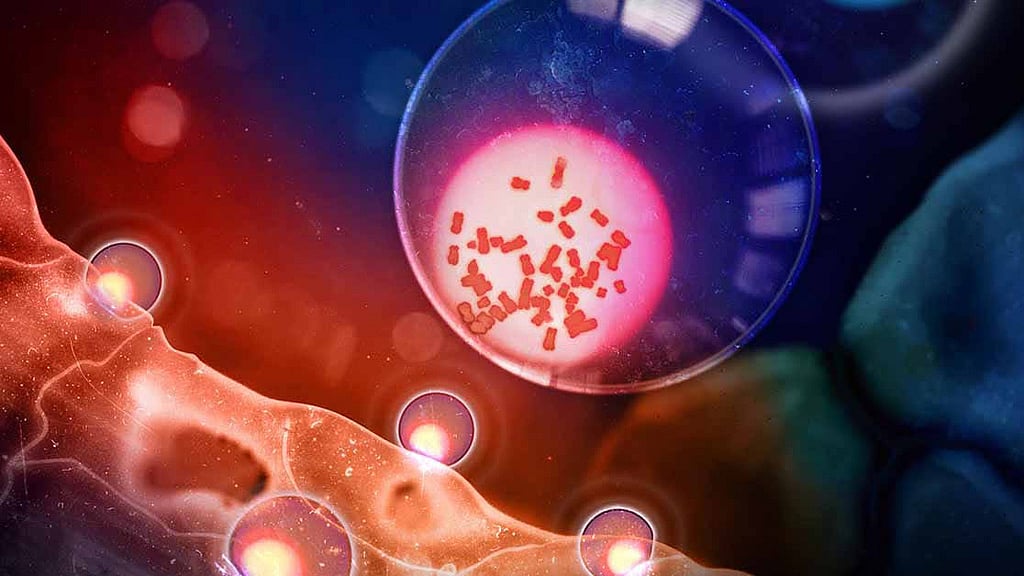
The research, initiated by Dr Dan Theodorescu, a physician-scientist at the University of Arizona Cancer Center, found that Y chromosome loss can create a “preneoplastic field effect”, a hidden area of genetic vulnerability in normal tissue that may provide conditions for cancer to develop.
Each cell in men’s bodies usually contains one X and one Y chromosome.
The loss of Y is a common genetic change in men as they age, in which an immune cell in the blood loses its Y chromosome.
Previous studies had linked Y chromosome loss in blood cells to a higher risk of disease.
The new research, published in JCI Insights, systematically examined Y chromosome loss across normal, precancerous and malignant tissues in 11 major human organs.
The researchers analysed 1,000 tissue samples from 405 men, using an automated fluorescent imaging system to examine more than 4.3 million individual cell nuclei and measure the ratio of Y to X chromosomes.
In one part of the study, the team created detailed maps of bladder tissue removed during cancer surgery.
The maps showed that Y chromosome loss increased from normal bladder tissue through early abnormal cells and into full-blown cancer.
The loss of Y in normal-appearing tissue was highest in cases of colon, rectum, esophagus, pancreas and lung cancer, as per the study.
“We were able to show that the loss of the Y chromosome is found in normal-appearing tissues adjacent to a tumour,” Theodorescu, the paper’s senior author, said.
“That finding is what makes this discovery so exciting. It suggests we may be looking at one of the earliest signposts of cancer forming.”
Theodorescu, who is also Nancy C and Craig M Berge endowed chair and director of the Cancer Center and a professor at the University of Arizona College of Medicine – Tucson, said the researchers were now viewing the pattern as a gradient.
“The closer the tissue is to a cancer, the more Y chromosome loss we see,” he said.
The gradient could one day help doctors suspect a problem in biopsies that miss a smaller cancer, he added.
Theodorescu’s previous related research focused on how Y chromosome loss in cancer cells enabled them to evade the immune system.
That work helped explain why Y chromosome loss has been linked to increased mortality from carcinomas.