He says the officer who tortured him in custody could not have acted without instructions from Sheikh Hasina
Published : 16 Sep 2026, 05:13 PM
The International Crimes Tribunal (ICT) is investigating allegations that student leader Mohammad Rashed Khan was tortured by members of the Dhaka Metropolitan Police (DMP) Cyber Crime Unit following his arrest during the 2018 quota reform movement, according to the tribunal's Chief Prosecutor Mohammad Aminul Islam.
Rashed, one of the organisers of the movement under the previous Awami League government, is now political assistant to the prime minister.
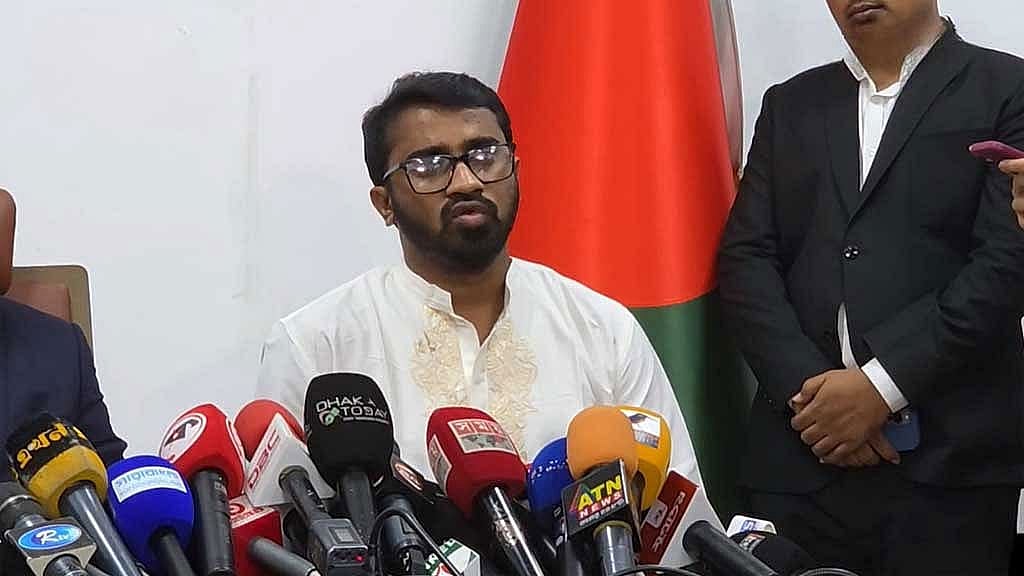
He met the chief prosecutor at the tribunal on Wednesday to inquire about the progress of the investigation into his complaint.
Speaking to journalists afterwards, Rashed said he was arrested in Bhashantek on Jul 1, 2018, and taken to the Detective Branch (DB) office on Minto Road. He was later taken to the DMP Cyber Crime Unit.
Rashed alleged that Ishtiaq Ahmed, then an additional deputy commissioner (ADC), tortured him for around 30 minutes after his hands and feet were tied, his eyes blindfolded and his mouth covered with a gamchha, or cotton towel.
Rashed said he was later arrested in a case accusing him of making derogatory remarks about then prime minister Sheikh Hasina during the quota reform movement. He said he had not known about the case beforehand.
“I was subjected to inhuman torture while on remand for 15 days and later suffered in jail,” Rashed said.
“ADC Ishtiaq Ahmed could not have done this without instructions from Sheikh Hasina.”
He also alleged that Ishtiaq had tortured several others in a similar manner, including Jubo Dal leader Mostafiz.
Rashed said he submitted a complaint to the tribunal on the chief prosecutor’s advice rather than filing a case with police. The tribunal subsequently took up the complaint as a case.
Aminul said investigators had received allegations that several leaders of the 2018 quota reform movement were picked up and subjected to torture and abuse.
An analysis of the allegations had revealed what he described as a recurring “pattern” or method, he said.
“Since he [Ishtiaq] carried out multiple incidents in the same manner, this is certainly part of a widespread and systematic offence,” Aminul said.
He said Rashed’s statement had already been recorded and investigators were examining who else may have been involved and the purpose of the alleged torture.
“The complaint initially appears to constitute an offence within the jurisdiction of the tribunal,” he said.
Aminul also referred to a separate allegation against Ishtiaq involving the abduction, enforced disappearance and killing of Maulana Al Amin.
He said Al Amin was allegedly abducted and held in custody for an extended period before being killed.
A formal charge has been filed against five people, including Ishtiaq, in that case following a report by the tribunal’s investigation agency, according to the chief prosecutor.
Asked whether Hasina was named in Rashed’s complaint, Aminul said her name could be added if investigators found evidence of her involvement.
He said “justice” would be ensured if the allegations were substantiated by the investigation.